Embedded AI for EHS: Moving from Assistance to Operational Intelligence
AI has moved beyond experimentation. The challenge for EHS, Quality, Sustainability, and Operations teams is no longer whether AI has potential, but whether it can improve operational execution, data quality, and decision-making at scale.
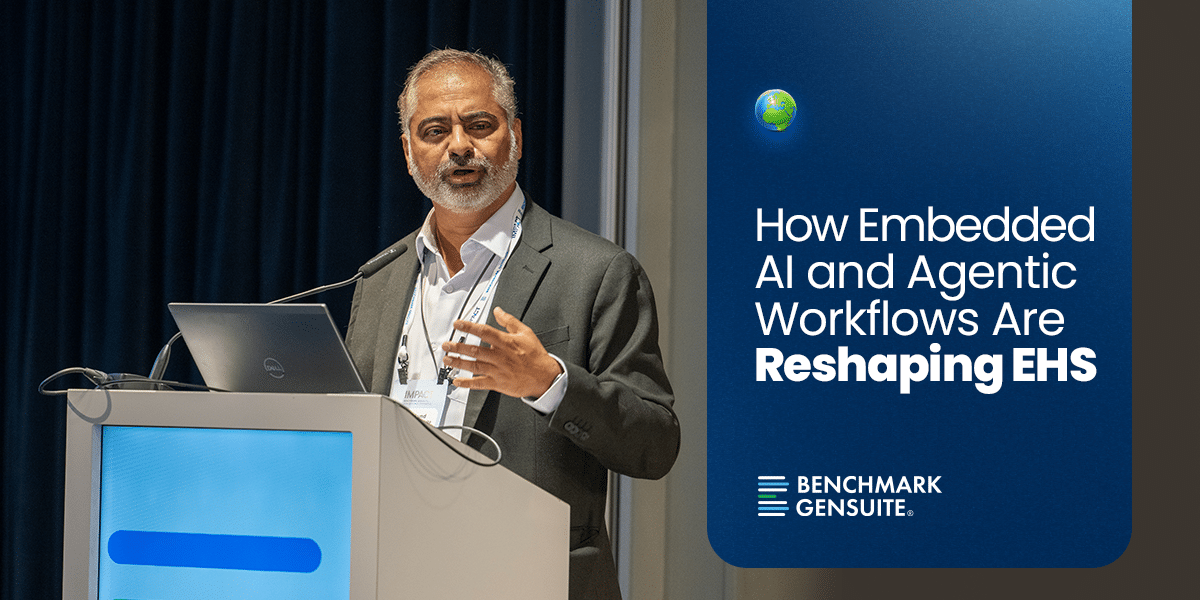
At the Europe IMPACT 2026 Benchmark Gensuite Customer Conference, Mukund, Founder & CEO, Mark Boehner, SVP Customer Success & Integration Executive, and Tom Clark, Principal Director, Subscriber Success, all at Benchmark Gensuite, showed how embedded AI is moving from platform vision into practical workflow support. The 2026 Product & AI Showcase focused on how AI can support everyday work across reporting, inspections, permits, chemical management, risk visibility, and executive insight.
The showcase highlighted a clear platform narrative: AI becomes most valuable when it is embedded within a connected operating model, where frontline data capture, workflow execution, risk intelligence, and strategic decision-making can reinforce one another.
AI Works Best When It Fits into the Work
AI delivers value when it becomes part of the workflow itself. For EHS teams, that means reducing friction at the point of reporting, inspection, investigation, and decision-making.
When AI requires users to leave the platform, write a separate prompt, copy information into another tool, and then bring the output back into the record, it can quickly become another task to manage. The value comes when AI is available at the moment of work, helping users complete tasks with more context and less manual effort.
This is the role Genny AI is designed to play. Rather than existing as a separate destination, Genny AI is becoming part of the Benchmark Gensuite platform experience itself, supporting users as they move through everyday workflows. Whether someone is reporting a concern, building an inspection checklist, extracting permit details, or reviewing the next action, embedded AI can help make the process faster and more useful.
As Mukund explained, the goal is AI as a productivity gain, not a productivity drain.
Frontline Adoption Depends on Simplicity
The showcase moved the conversation from platform vision to frontline reality. Mark set the stage by focusing on a familiar challenge: digital programmes only succeed when frontline and operational users can engage with them easily. In EHS, the best dashboard cannot help much if the right information never enters the system. The strongest workflow will still struggle if reporting feels too manual, too slow, or too disconnected from the pace of work.
Tom’s product demonstration showed how embedded AI can help close that gap. In Concern Reporting, users can take a photo, allow AI to analyse the image, and have the system help populate parts of the concern record. Describe It AI can then assess the strength of the description and prompt the user to add more useful detail where needed.
That small moment in the user experience carries larger operational value. Easier reporting can support better data capture, stronger record quality, faster response, and more consistent information for trend analysis and risk visibility. A connected EHS software foundation helps bring these inputs into wider workflows, from concern reporting and inspections to actions, incidents, and programme oversight.
Better AI Starts with Better Data
AI is only as valuable as the data behind it. If information is incomplete, inconsistent, or disconnected, AI has less context to work with and less ability to produce meaningful insight. For EHS, Quality, Sustainability, and Operations teams, data quality is not just a technical issue. It directly affects risk visibility, operational intelligence, and executive decision-making.
That is where tools like Describe It AI become more important than they may first appear. The goal is not only to help a user write a better description. It is to improve the quality of the record while the context is still fresh. Stronger data at the point of capture can make downstream reporting, analysis, escalation, and decision-making more reliable.
The same principle appeared in the inspection checklist builder. Tom showed how AI can help digitise inspection checklists from existing files, extract questions, suggest sections, and support faster setup. Instead of manually rebuilding every checklist, teams can start from the materials they already have and move more quickly towards a structured digital process.
This connects directly to the broader AI strategy Mukund described. Embedded AI does not begin with the executive dashboard. It begins with the everyday records, workflows, and inputs that make reliable intelligence possible. When data capture improves, the value of everything downstream improves with it.
From Helpers to Agents
The showcase showed how AI capabilities are progressing from task-level support to more specialised programme assistance. AI helpers can draft, summarise, extract information, analyse images, or improve descriptions. These features reduce friction in specific moments of work.
Expert agents go further. They are designed around defined programme needs, with logic and context built into the experience. The session referenced examples such as Permit Agent and Chem Agent, each focused on specialised workflows.
Unlike generic AI assistants, purpose-built agents operate within defined operational workflows, governance requirements, and enterprise data structures. This distinction matters for EHS, Quality, Sustainability, and Operations teams, where accuracy, context, repeatability, and human review are essential.
Permit Agent can help extract key information from permits, including deadlines, conditions, emission sources, or parameters. Chem Agent can support SDS-related workflows, including prompts around chemical approvals, safety information, risk details, and operating instructions.
The important point is that these agents provide a stronger starting point while keeping validation with the people who understand the programme.
Risk Intelligence Requires Purpose-Built AI
Mukund also outlined a broader view of the AI suite, spanning everyday task support, risk intelligence, and agentic AI. This helped position the showcase within a larger direction: AI should not only make forms easier to complete. It should also help teams interpret risk more consistently.
That requires fit-for-purpose AI. General AI tools can be helpful, but EHS and operational risk work often needs more than a broad answer. It needs consistency, context, repeatable logic, and a clear link back to the workflows and data that teams rely on.
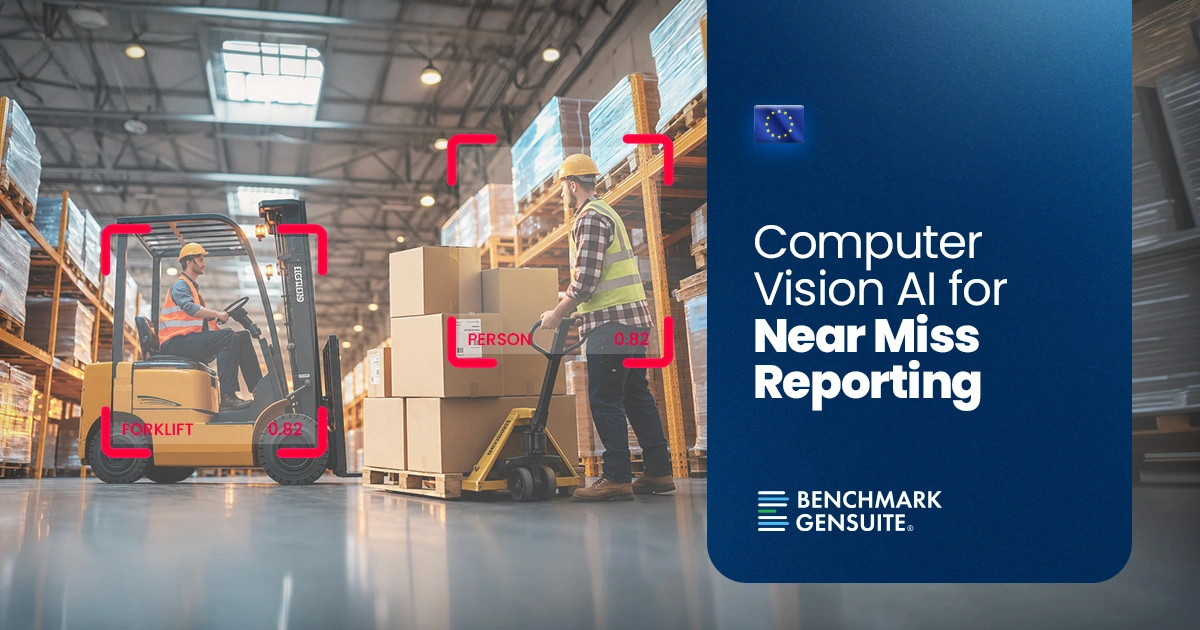
The session referenced risk intelligence capabilities focused on areas such as significant incident and potential serious injury or fatality identification, ergonomics AI, video analysis, computer vision, and partner-enabled models. This matters because risk is rarely visible through one data point alone. It often emerges across concern reports, incidents, inspections, actions, audits, permits, site conditions, and operational context.
AI Should Give Time Back to EHS Teams
Beneath the technology discussion was a very practical point: EHS teams are often asked to do more with limited time, limited resources, and wide operational responsibility. Mukund spoke to the reality of functional leaders wearing many hats, while Mark and Tom showed how embedded AI can reduce friction across daily tasks, from reporting and descriptions to document extraction and checklist creation.
Taken together, the session pointed to a clear outcome. AI should help teams spend less time managing repetitive manual work and more time where their expertise has the greatest impact. For EHS teams, that means more time engaging with operations, supporting frontline workers, coaching leaders, understanding risk in context, and helping the organisation make better decisions.
From Assistance to Agentic Workflows
The showcase also introduced a more advanced direction: agentic workflows. Tom described the current model as one where users drive and Genny AI assists. The future direction is one where users direct and Genny AI drives more of the process.
That shift means AI does not only provide information or suggestions. It begins to help move work forward based on the user’s intent, workflow context, and available data. In practical terms, this could mean helping interpret information, extract relevant details, suggest next steps, prepare records, or guide the user through a more complex workflow.
Human review remains central. Agentic workflows are not about handing over judgement. They are about reducing the manual burden between identifying what needs to happen and getting the work moving.
Strategic Intelligence Is the Next Horizon
The showcase closed the loop by looking beyond individual tasks and workflows to a larger opportunity: strategic intelligence. Today, many leaders spend significant time pulling reports, reviewing dashboards, comparing metrics, and trying to determine what needs attention. Dashboards can be valuable, but they still require leaders to interpret the information, connect the patterns, and decide what to do next.
Mukund described the vision for Genny AI Ultra as a more intelligent way for leaders to engage with enterprise data. Instead of only reviewing reports, leaders could ask questions about site visits, board meetings, programme focus areas, or emerging risks, then receive synthesised insight they can review and validate.
The long-term opportunity is not simply faster form completion. It is transforming operational data into strategic intelligence that leaders can use to prioritise risk, improve execution, and strengthen organisational resilience.
Frontline users need easier data capture. EHS teams need stronger workflows. Programme leaders need fit-for-purpose risk intelligence. Executives need clearer strategic visibility. Strategic intelligence is only as strong as the data, workflows, and context underneath it.
Moving AI from Novelty to Indispensability
The strongest takeaway from the 2026 Product & AI Showcase was that AI needs to be practical. It should help frontline workers report faster, help teams build better records, help experts validate information more efficiently, and help leaders understand where to focus.
For organisations still early in their AI journey, the starting point does not need to be complex. Begin with the areas where users lose time, where data quality suffers, or where manual review slows execution. From there, AI can support a more connected way of working, from frontline data capture to programme-level insight.
The broader opportunity is executive as much as operational. When AI is embedded within connected workflows, organisations can reduce enterprise risk exposure, strengthen governance, improve operational resilience, accelerate execution, and gain better strategic visibility across EHS, Quality, Sustainability, and Operations.
The future of AI in EHS is not about adding another tool to manage. It is about making existing workflows smarter, faster, and more useful for the people doing the work, while giving leaders stronger intelligence to guide decisions at scale.