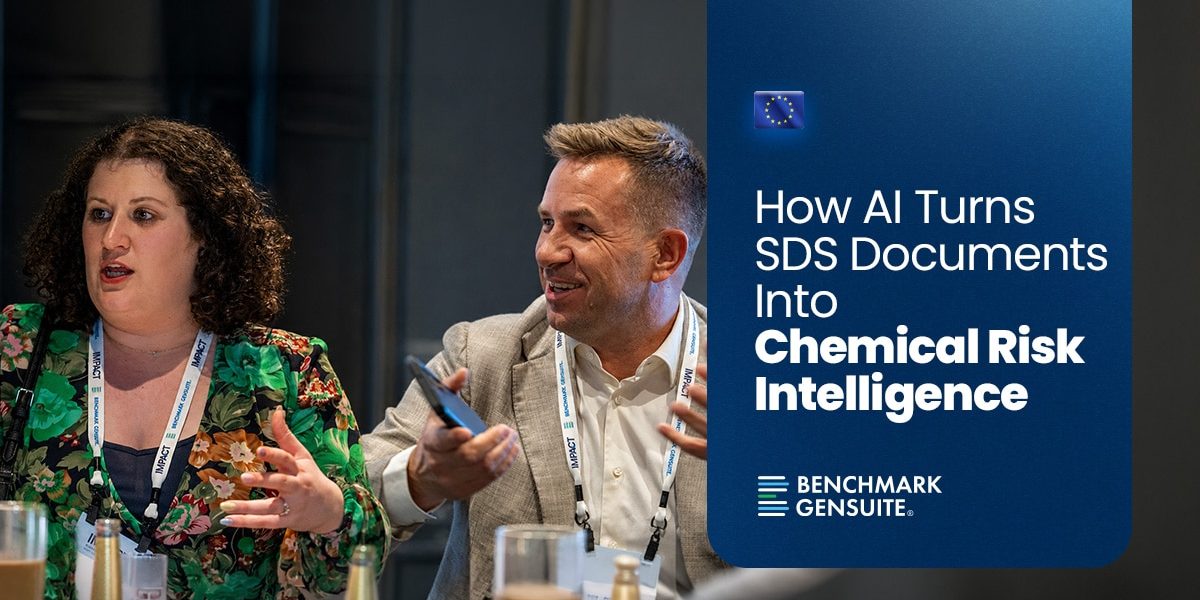
Chemical management has never been only about keeping SDS documents on file. For EHS teams, chemical information sits at the centre of workplace safety, environmental protection, regulatory obligations, and everyday operational decision-making.
Yet the information teams rely on often sits across PDFs, spreadsheets, binders, manual approvals, and disconnected systems. A chemical may be approved for use at a site, but the details that matter most, including hazards, constituents, PPE, exposure risks, environmental concerns, version changes, and regulatory flags, are not always easy to find when people need them.
This is where AI can help chemical management move beyond document storage. When SDS information becomes structured, searchable, and connected to the workflows where decisions happen, teams can use chemical data as a practical source of risk intelligence rather than a static reference file.
Developed with insight from BENS Consulting, this topic reflects a wider challenge for EHS and product stewardship teams: how to reduce manual effort, improve data quality, and help organisations make better chemical decisions before risks become harder to control.
Chemical Management Is Moving Beyond SDS Access
For many organisations, the SDS remains the starting point. Employees need access to current and understandable information so they can handle chemicals safely, reduce exposure, and respond appropriately if something goes wrong.
But modern chemical management reaches much further. EHS teams need to understand what chemicals are on site, how they are used, which substances may require additional controls, and how chemical data connects to workplace safety, environmental protection, sustainability priorities, and evolving regulatory requirements.
This is especially important as organisations monitor substances of concern, including PFAS, targeted regulatory lists, and business-specific chemicals identified for reduction or substitution. Teams are being asked to make better decisions earlier, often before a chemical is approved for use.
A modern SDS System Software approach helps make that possible by turning SDS information into structured, searchable, and connected chemical data. That gives teams a stronger foundation for approvals, inventories, risk assessments, and reporting.
Better Chemical Decisions Start with Better Data
AI can help teams move faster, but the value of AI-supported decisions still depends on the quality of the information behind them. If chemical data is incomplete, inconsistent, or locked inside unstructured PDFs, teams still have to spend time checking, correcting, and re-entering information across systems.
That is why structured chemical data matters. Instead of treating an SDS as a static PDF, AI can help extract and organise information into digital product records that are easier to validate, manage, update, translate, and connect to downstream workflows.
This can reduce manual data entry and help teams build a more reliable chemical information foundation. It also supports better collaboration between SDS authoring, chemical approvals, site inventories, industrial hygiene, product stewardship, and broader EHS workflows.
Using AI to Reduce Manual SDS Workflows
One of the clearest opportunities for AI is in the early stages of chemical information management. When a user uploads an SDS during a chemical request, AI can review the document and pull key information into the system, including product details, constituents, and identifying information such as EC numbers.
This gives approval teams more visibility before a chemical is accepted for site use. If constituents can be reviewed against regulatory lists, PFAS lists, or business-specific targeted substance lists during approval, EHS teams can make more informed decisions from the start.
AI can also support batch upload processes, helping teams bring larger volumes of SDS documents into the system more efficiently. Instead of relying fully on manual review and data entry, AI can highlight extracted information, flag gaps, identify potential duplicates, and support validation before records move into the site approval process.
The value is not about removing human review. It is about giving chemical experts a stronger starting point, so they can spend less time typing information from documents and more time validating data, reviewing risk, and guiding safer decisions.
Making Chemical Risk Easier to Identify
Once chemical information is captured, teams need to understand what it means in context. A product may contain a substance of concern, a classification may change, or a site may need to know whether a chemical contains PFAS or another targeted substance.
Managing these questions manually becomes harder across multiple sites, suppliers, products, and languages. AI-supported chemical management can help surface these risks earlier by identifying relevant chemical information during approval, review, and inventory management.
This helps teams decide whether to approve a chemical, apply additional controls, request more information, or begin a substitution process. It also moves chemical management closer to proactive risk control, where teams can identify potential issues during approval rather than waiting for an audit, reporting cycle, or incident.
That shift matters operationally. When EHS teams can see risk earlier, they are better positioned to prevent avoidable exposure, reduce unnecessary chemical complexity, and support stronger compliance decisions across sites.
Supporting Workers with Clearer Chemical Instructions
Chemical safety information is only useful if people can understand and apply it. SDS documents contain essential information, but they are not always easy for frontline teams to interpret quickly during daily work.
AI-supported tools such as Genny AI can help users ask practical questions about a chemical, including what PPE may be needed, based on the SDS information available. This makes complex chemical information easier to use during approvals, risk assessments, and operational tasks.
AI can also help create draft operating instructions by reviewing SDS content and organising relevant information such as hazards, pictograms, PPE guidance, emergency procedures, and first aid measures. Site teams can then review, edit, and add local requirements before making the instruction available to workers.
This human-in-the-loop approach is essential. AI can support the draft, but EHS teams still need to validate the output based on how the chemical is used, where it is handled, what controls are in place, and what local requirements apply.
Simplifying Compliance and Reporting
Chemical management also creates significant reporting pressure. Teams need to understand site inventories, thresholds, regulatory requirements, and where further investigation may be needed.
AI can help reduce the effort involved in preparing this information. For example, AI-supported analysis can help compare site inventory information against applicable reporting requirements and flag where thresholds may be exceeded or where additional review is needed.
The wider opportunity is bigger than faster reporting. When chemical data is centralised, current, and connected to AI-supported workflows, EHS teams can spend less time searching for information and more time acting on it.
Chemical management will always require expertise. Site conditions, exposure routes, operating processes, local language needs, and regulatory expectations all need careful review. AI helps make that expertise easier to apply at scale by improving the quality, speed, and accessibility of chemical information.
For EHS teams, the opportunity is to turn SDS documents into structured chemical intelligence, connect that intelligence to the workflows where decisions happen, and give teams better tools to manage chemical risk before it becomes harder to control.
About BENS Consulting
BENS Consulting is a chemical consulting company supporting organisations with chemical documentation, safety data sheets, REACH, ADR, biocides, UFI/PCN notifications, and chemical management. Its Chemius platform helps teams manage chemical documentation through a web-based system, supporting access to SDS information and related product documentation. Through its work with Benchmark Gensuite, BENS Consulting brings SDS authoring and structured chemical data expertise into the AI-powered chemical management conversation.
About Benchmark Gensuite
Benchmark Gensuite® delivers AI-forward, best-in-class digital EHS, Sustainability, Quality, and Risk solutions for global enterprises. Powered by a single-version, cloud-based platform and enriched by a rapidly expanding suite of generative AI tools, Benchmark Gensuite empowers more than 4 million users across industries to proactively manage risk, ensure compliance, and accelerate performance. With over two decades of domain expertise, award-winning customer service, and a commitment to continuous innovation, Benchmark Gensuite is the trusted partner for organizations seeking both operational excellence and strategic impact.