AI won't replace safety and health professionals — but it will reshape which parts of the job survive

ISHN canvassed AI vendor CEOs, researchers, and safety practitioners on whether generative AI will eliminate safety and health jobs. Benchmark Gensuite’s view: the debate conflates two very different kinds of work, and only one of them is genuinely exposed.

published

May 4, 2026

Originally covered by

TOPIC

AI & the future of EHS work

  • R. Mukund, Founder & CEO, Benchmark Gensuite
    Founder & Chief Executive Officer

As covered in

ISHN

━ Overview

ISHN put a hard question to a range of voices in the safety and health industry: with tech CEOs predicting AI will automate most white-collar work within 12 to 18 months, are safety and health jobs next? The resulting piece canvassed AI vendor executives, researchers, and practitioners — including Benchmark Gensuite’s CEO — for their read on the risk.

This page builds out the reasoning behind Benchmark Gensuite’s position in that conversation — why the question “will AI take safety jobs” is less useful than asking which parts of the job it’s actually positioned to take.

━ Benchmark Gensuite Perspective

The debate about AI job losses conflates two very different kinds of safety work

The current wave of AI job-loss predictions is aimed at white-collar work broadly — the lawyer, the accountant, the marketing manager, the project manager sitting at a computer all day. It’s a reasonable question to extend to safety and health professionals, since a meaningful share of the role also happens at a desk: writing reports, tracking compliance obligations, summarizing incidents.

But that framing misses the part of the job that doesn’t happen at a desk. Coaching a worker on unsafe behavior, building the trust that gets a near-miss actually reported, reading a room during a tense post-incident conversation — none of that is document work, and none of it responds to a larger model or a faster chip the way drafting a report does. The tasks most exposed to AI automation are concentrated in the administrative layer of the job — but “exposed” doesn’t mean “unsupervised.” A misread requirement in a permit summary or an overlooked exposure limit in a hazard analysis isn’t a minor drafting error; in health and safety, it’s the kind of mistake that can cost someone their life. The tasks that define the profession sit partly in the field, and partly in the judgment applied to everything AI produces before anyone relies on it.

“The human touch is crucial to preventing AI from making wrong decisions or providing false information.”

— R. Mukund, Founder & CEO, Benchmark Gensuite

That’s why human-in-the-loop oversight isn’t framed as a transitional feature at Benchmark Gensuite — something to phase out once the models get good enough, or something reserved for the field-based side of the job. It applies just as much to the administrative work AI is best at: a permit obligation extracted incorrectly, an SDS change summarized wrong, a hazard flagged and then dismissed. Any one of those looks like routine paperwork right up until it’s the thing a compliance team acts on, or fails to act on, and in health and safety a missed digital error isn’t a productivity setback — it can be the difference between an incident prevented and one that wasn’t. As AI capability improves, the argument for review doesn’t weaken; the stakes of a missed error stay exactly as high as they’ve always been.

For EHS leaders, the useful question isn’t whether AI is “coming for” the profession. It’s an honest audit of where the team’s time actually goes today — and how much of it sits in the administrative layer AI is already well-suited to absorb, versus the field-based, relational work that remains squarely a human responsibility.

━ Key themes

Three things to understand about AI and safety job security

  1. 1
    The desk-bound tasks are exposed — not the profession itself
    Documentation, drafting, and routine compliance Q&A are the applications where generative AI is already doing real work today — but that work still needs a person checking it, since a missed detail in a permit summary or hazard report carries the same consequences as a mistake made in the field. Field presence, coaching, and culture-building are a different category of task entirely, and current AI capability doesn't reach them regardless of how large the underlying model gets.
  2. 2
    Human-in-the-loop is permanent design, not a transitional safeguard
    In domains where an AI error carries legal or physical consequences, oversight isn't something to remove once the technology matures — and it isn't limited to field decisions. Reviewing AI-drafted permit analyses, hazard summaries, and compliance documentation matters just as much, since an error there can pass as routine paperwork right up until someone acts on it. The stakes don't decrease as models improve, which is why review and approval stay built into the workflow indefinitely.
  3. 3
    Leaner EHS staffing today is testing a narrow hypothesis, not a broad one
    Where organizations have already trimmed safety headcount, it's typically because AI absorbed administrative volume — not because a single tool replaced the full scope of a safety role. Reading that trend as evidence the entire profession is at risk overstates what's actually happening in most workplaces.

━ Featured executive

Founder & Chief Executive Officer - Benchmark Gensuite

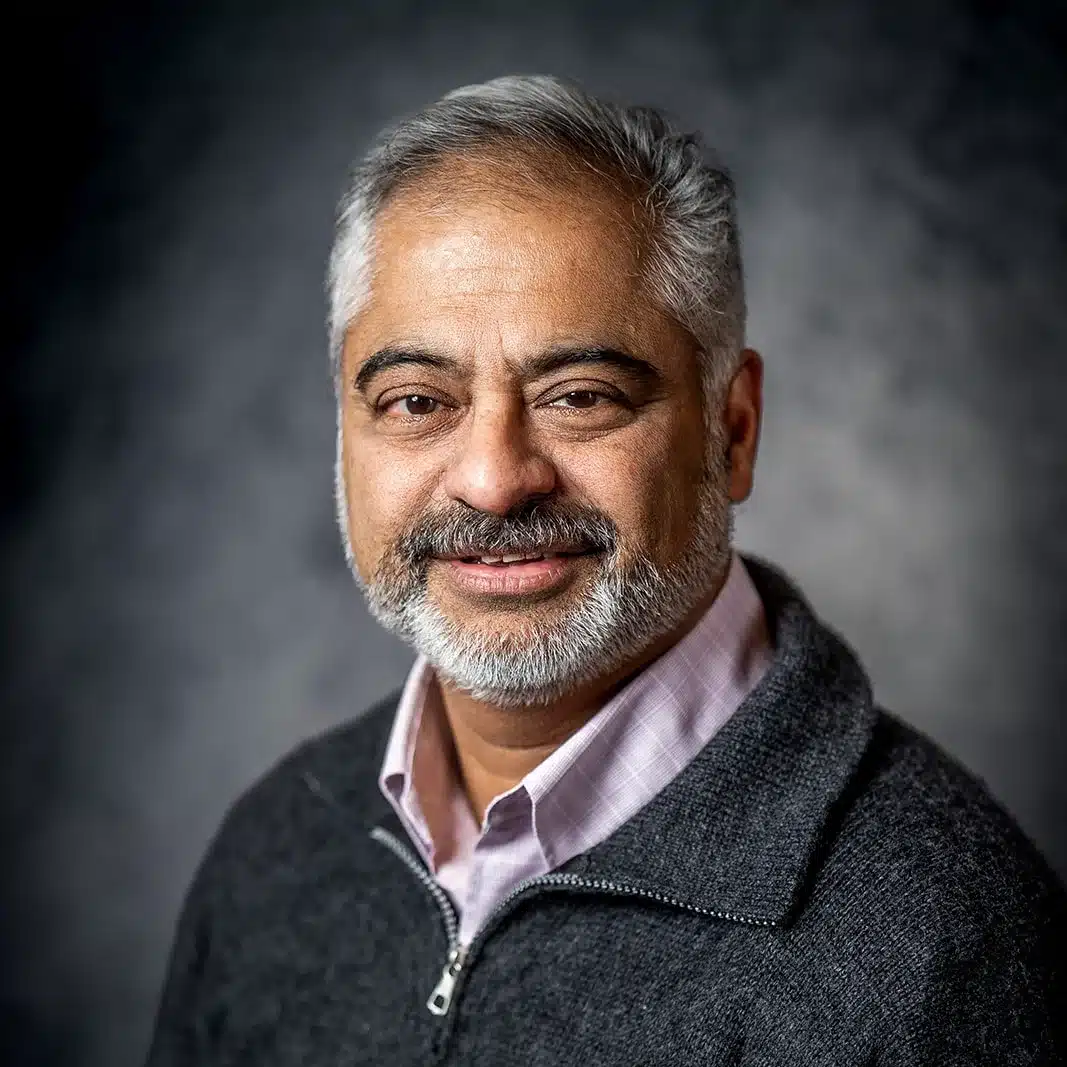
R. Mukund is Founder and CEO of Benchmark Gensuite — a role he has held since 2010. Over a career spanning more than 30 years, he has held progressive roles as a technical professional, team leader, Six Sigma Master Black Belt, and executive program manager across research and technology, consulting, corporate diversified, and cloud-based tech-enabled services organizations.

The Benchmark Gensuite platform was built under Mukund's leadership from inception. Today it supports 480+ companies globally as subscribers of its cloud-based, best-practices-driven Environmental, Health, and Safety digital business transformation software — spanning risk and compliance, sustainability and disclosure reporting, frontline operations, quality, and product stewardship. The platform serves over 8 million workers across 30+ industry sectors and 150+ countries, supported by a global team across 10 offices, and headquartered in Mason, OH.

Mukund holds an M.S. in Chemistry from the Indian Institute of Technology in Kanpur, and an M.S. and Ph.D. in Environmental Sciences & Engineering from the University of Illinois at Urbana-Champaign. He serves on the advisory board of the Indian American Chamber of Commerce of Greater Cincinnati and Northern Kentucky, and on the board of RxPredict Inc., a health and wellness startup.

Frequently Asked Questions

About the AI Agent framework

Will AI replace safety and health professionals?

Most industry voices, including Benchmark Gensuite’s CEO, describe AI as augmenting the safety function rather than replacing it outright. The tasks most exposed to automation are administrative and desk-based — documentation, drafting, and summarization — while field presence, culture-building, and relationship-driven safety work remain difficult for AI to replicate.
The tasks currently most automated are administrative: drafting incident reports, summarizing documentation, and answering routine compliance questions through generative AI chatbots. Field-based work — building trust with workers, coaching safe behavior, and exercising judgment in ambiguous situations — is far less exposed, since it depends on relational and physical presence that current AI cannot provide.
Human-in-the-loop means an AI system can analyze, draft, or recommend, but a qualified person reviews and approves the output before it becomes an action or a record. In safety and compliance work, where errors carry legal and physical consequences, this isn’t a temporary safeguard to be removed as AI matures — it’s a permanent feature of how the tools are designed to be used.

SEE IT IN ACTION

Ready to see Benchmark Gensuite in action?

See how enterprise EHS teams use our platform to manage risk, compliance, and safety outcomes at scale.

Find your enterprise instance of
Benchmark Gensuite

Note: Subscriber instances where you have an active registered user account are listed above. If you need further support, please email us at getHelp@benchmarkdigital.com
Please include your company name and registered email address so we can assist you.