Home » Market Insights » EHS Strategy & Digital Transformation » 4 Shifts Redefining EHS in 2026
Benchmark Gensuite Founder & CEO R. Mukund lays out four shifts reshaping EHS operations this year — from closing the digital transformation gap to deploying AI agents inside daily workflows. This page builds on his EHS Today byline with the operational detail behind each one.
published
January 29, 2026
Originally covered by
TOPIC
Executive byline
━ Overview
R. Mukund, Founder & CEO of Benchmark Gensuite, published a byline in EHS Today outlining four shifts set to define EHS operations in 2026 — from the operational cost of delayed digital transformation to the arrival of AI agents inside everyday compliance workflows. The piece lays out a clear framework for where EHS technology is heading this year.
This page builds on that framework with the operational detail EHS leaders need to act on it — the concrete systems, workflows, and requirements behind each of the four shifts, and what putting each one into practice actually involves.
━ Benchmark Gensuite Perspective
Mukund’s framework identifies four shifts EHS leaders will be navigating in 2026. For teams translating that framework into an actual roadmap, the next question is what each shift looks like once it becomes a specific build-or-buy decision. This page takes each shift a layer deeper into that operational territory.
Closing the digital transformation gap means more than digitizing existing forms. It means a single system of record that every site can write to and read from in real time, so a hazard logged on a plant floor in one region is visible to a corporate EHS team the same day — not reconciled at month-end from five different spreadsheets. That’s the difference between “we have a database” and an actual digital foundation.
Making mobile tools standard raises its own set of practical requirements: offline capture for sites with unreliable connectivity, photo and voice-to-text input so reporting doesn’t require a desk, and access that extends to contractors and temporary workers, not just full-time staff. Skip any one of those and participation drops back to the subset of the workforce closest to a keyboard — which is exactly the visibility gap mobile tools are meant to close.
AI decision support depends on a specific kind of readiness: a large enough, clean enough body of incident, observation, and equipment data for pattern detection to actually surface something a human reviewer would have missed. That’s a data engineering question as much as an AI question — the model is only as useful as the history it has to work from.
And AI agents taking on multi-step workflows requires the workflow itself to already be structured — clear ownership for each action, defined escalation paths, and a documented review step before anything the agent produces gets finalized. Agents extend a well-defined process; they don’t invent one where none existed.

━ Key themes
━ Featured executive
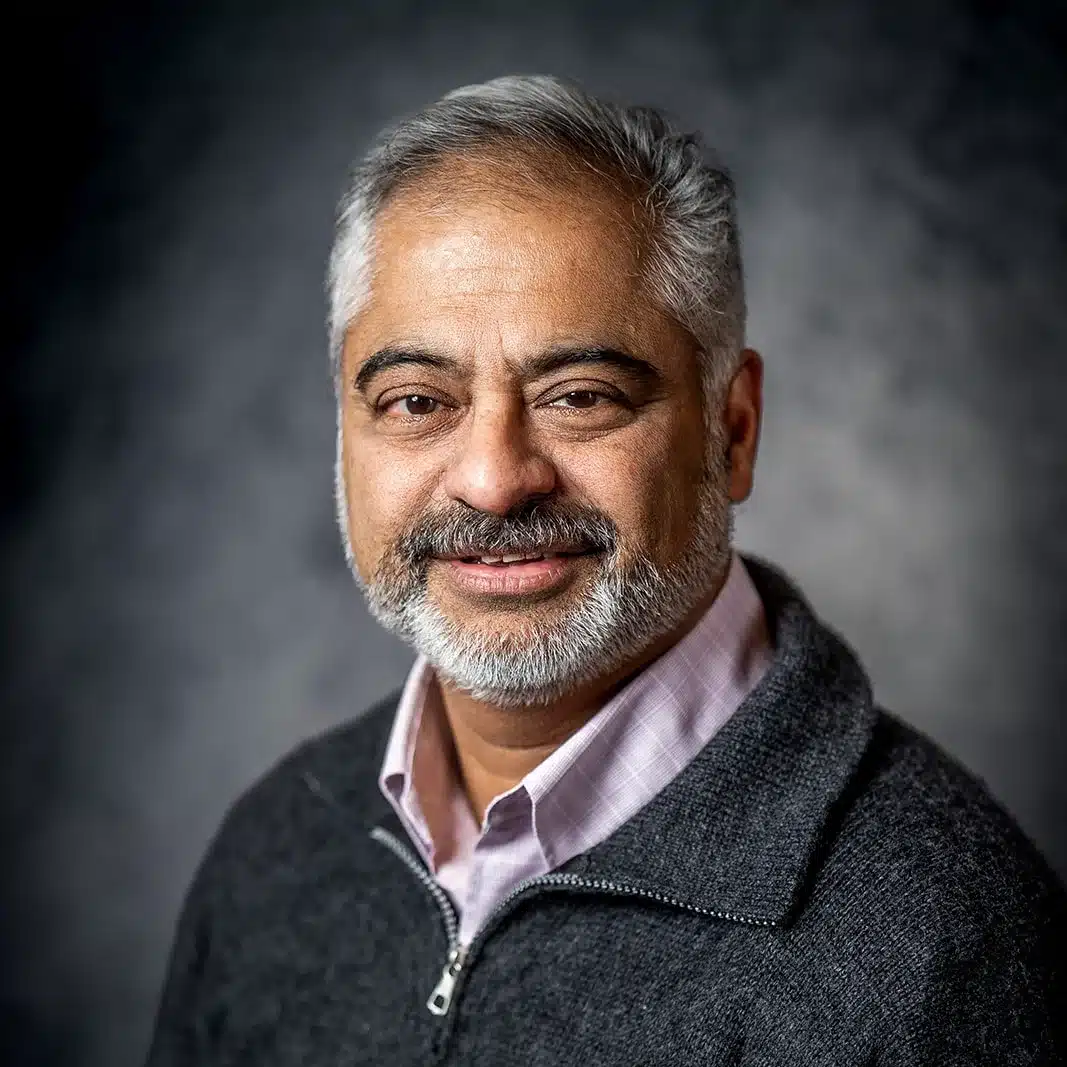
R. Mukund is Founder and CEO of Benchmark Gensuite — a role he has held since 2010. Over a career spanning more than 30 years, he has held progressive roles as a technical professional, team leader, Six Sigma Master Black Belt, and executive program manager across research and technology, consulting, corporate diversified, and cloud-based tech-enabled services organizations.
The Benchmark Gensuite platform was built under Mukund's leadership from inception. Today it supports 480+ companies globally as subscribers of its cloud-based, best-practices-driven Environmental, Health, and Safety digital business transformation software — spanning risk and compliance, sustainability and disclosure reporting, frontline operations, quality, and product stewardship. The platform serves over 8 million workers across 30+ industry sectors and 150+ countries, supported by a global team across 10 offices, and headquartered in Mason, OH.
Mukund holds an M.S. in Chemistry from the Indian Institute of Technology in Kanpur, and an M.S. and Ph.D. in Environmental Sciences & Engineering from the University of Illinois at Urbana-Champaign. He serves on the advisory board of the Indian American Chamber of Commerce of Greater Cincinnati and Northern Kentucky, and on the board of RxPredict Inc., a health and wellness startup.
Frequently Asked Questions
What are the four shifts redefining EHS in 2026?
Why do EHS teams need a digital foundation before adopting AI?
What's the difference between AI decision support and AI agents in EHS?
How many enterprise applications will use AI agents by 2026?
SEE IT IN ACTION
See how enterprise EHS teams use our platform to manage risk, compliance, and safety outcomes at scale.
Note: Subscriber instances where you have an active registered user account are listed above.
If you need further support, please email us at
getHelp@benchmarkdigital.com
Please include your company name and registered email address so we can assist you.