In today’s fast-evolving world, the role of EHS & Sustainability leaders has become more complex than ever. Beyond ensuring compliance and keeping people safe, leaders are now expected to align with corporate sustainability goals, manage operations globally, lead multigenerational teams, adopt emerging technologies, and justify every investment with clear ROI.
It’s no surprise that many EHS professionals feel stretched out thin. The expectations are high, and the challenges are constantly shifting.
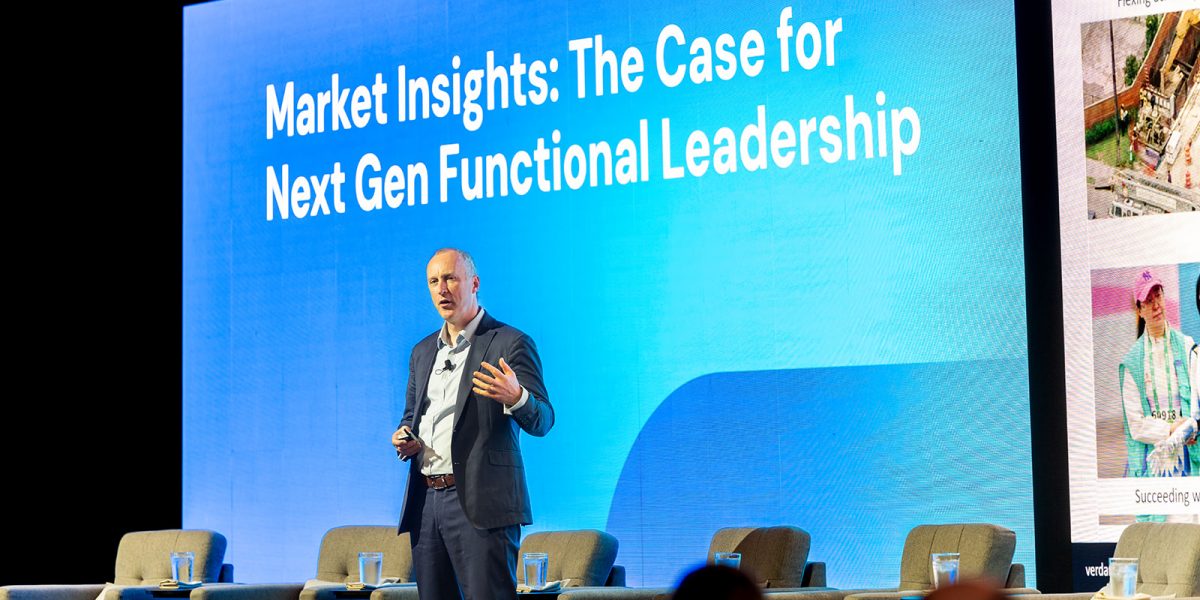
At the 2025 Benchmark Gensuite IMPACT Conference, David Metcalfe, CEO of Verdantix, delivered a compelling call to action: the future of EHS leadership demands strategic thinking, adaptability, and bold innovation. Drawing from 15 years of research and feedback from 800+ global EHS and sustainability leaders, he outlined six defining traits of next-gen functional leadership.
Let’s break down how EHS and Sustainability professionals can step up to meet today’s most pressing challenges.
The Six Pillars of Next-Generation EHS Leadership
Flexing Across Operational Domains 🌍
The Challenge: Global EHS management across diverse regulatory landscapes
Modern EHS leaders operate across global landscapes with radically different laws, cultural behaviors, and organizational values. A standardized, one-size-fits-all approach simply cannot address the complexity of international operations.
“You can’t lead the same way in India, Dubai, and the U.S.—and your systems shouldn’t either.”
The Solution: Develop modular strategies that adapt to local realities while maintaining global standards. Instead of creating fragmented, country-specific programs, smart leaders build flexible frameworks that can be customized for different jurisdictions without compromising the organization’s broader mission.
Key Implementation Strategies:
- Create localized safety protocols that reflect regional risk profiles
- Design scalable EHS management systems with regional customization capabilities
- Establish clear communication channels that account for time zones and languages
Mitigating Interconnected Risks ⚡
Challenge: Moving beyond isolated risk management to systemic thinking
Traditional safety programs focus on individual risks in isolation, but modern business operations involve interconnected systems where small disruptions can trigger major consequences across the entire organization.
Metcalfe illustrated this with a compelling example: a transformer fire near Heathrow Airport triggered a complete shutdown, canceled over 1,300 flights, and stranded nearly 300,000 people—a shutdown that could have been prevented with better systemic risk planning.
The Solution: To address this challenge, it’s necessary to think systemically and proactively. Adopt comprehensive emergency preparedness planning that accounts for infrastructure vulnerabilities, supply chain dependencies, and cascading failure scenarios.
Key Implementation Strategies:
- Conduct comprehensive business impact assessments
- Develop scenario-based emergency response plans
- Implement predictive analytics for risk identification
- Create cross-functional risk management teams
- Establish real-time monitoring systems for critical infrastructure
Leading a Heterogeneous Workforce 👥
Challenge: Managing five generations in the workplace simultaneously
For the first time in history, five generations—from Baby Boomers to Gen Alpha—are working together, each with fundamentally different expectations for leadership, communication, learning, and loyalty.
These generational differences extend beyond surface-level preferences to reflect different definitions of workplace loyalty, communication styles, and learning expectations. For example, Millennials and Gen Z often define loyalty through daily contribution rather than years of service.
“It’s not just about language, personalities and nationality differences, but actually you’ve got these hugely different expectations in terms of leadership and learning.”
The Solution: Lead with empathy, adaptability, and generational intelligence to ensure everyone feels valued and empowered to contribute.
Key Implementation Strategies:
- Implement multi-modal training programs (visual, auditory, hands-on) to accommodate different learning styles
- Create mentorship programs that pair different generations
- Develop flexible communication channels (mobile apps, video, traditional reports)
- Establish recognition programs that appeal to different generational values
- Design career development paths that accommodate diverse work styles
Succeeding with Technology Innovation 💻
Challenge: Embracing digital transformation in EHS management
Many EHS professionals don’t consider themselves tech-savvy, but the reality is that the EHS sector has consistently embraced innovation, often ahead of other industries. From mobile apps and ergonomic sensors to drones and AI-powered incident reporting, EHS teams have been early adopters of practical, high-impact technology.
“I don’t think the EHS or the sustainability community really sees themselves as innovators, but you are all tech innovators. That’s a critical part of next-gen leadership.”
The Solution: Intentionally embed technology and artificial intelligence into every initiative, from day-to-day operations to long-term strategic planning.
Key Implementation Strategies:
- Implement IoT sensors for real-time environmental monitoring
- Use AI-powered analytics for predictive safety insights
- Integrate wearable technology for worker health monitoring
- Leverage drone technology for facility inspections and risk assessments
Scaling with Business Growth 📈
Challenge: Maintaining EHS excellence during rapid expansion
Business growth brings complexity through new risks, unfamiliar processes, and sometimes conflicting safety cultures. Whether through rapid expansion, new market entries, or major acquisitions, growth can quickly turn into vulnerability if EHS systems don’t scale alongside the business.
Metcalfe highlighted this with an example from Nvidia: at the height of its growth, the $3 trillion company stored all its AI chips in a single warehouse in Hong Kong—creating an enormous single point of failure.
“Imagine being responsible for that warehouse. That’s a safety leader’s nightmare—or opportunity.”
The Solution: Next-generation EHS leaders don’t just react to growth—they help shape it by embedding safety, sustainability, and compliance into expansion strategies from day one.
Key Implementation Strategies:
- Develop scalable EHS management systems that grow with the business
- Create standardized onboarding processes for new facilities and acquisitions
- Implement due diligence protocols for M&A activities
- Build cross-functional teams that include EHS representation in growth planning
Enhancing Financial Business Cases 💰
Challenge: Securing funding through compelling ROI demonstrations
EHS leaders often struggle to secure adequate funding—not due to lack of impact, but because building detailed financial models and business cases hasn’t always been a typical part of the role’s toolkit. But in today’s business climate, impact must be measurable and tied directly to business value.
The Solution: Build business cases that clearly demonstrate the ROI of EHS initiatives through cost-benefit analysis, whether savings are accomplished through reducing workers’ compensation claims, avoiding environmental penalties, or driving operational efficiency.
Key Implementation Strategies:
- Develop comprehensive cost-benefit models for EHS initiatives
- Track and report key performance indicators (KPIs) that matter to executives
- Quantify risk reduction in financial terms
- Demonstrate correlation between EHS performance and business outcomes
- Create executive dashboards that show real-time EHS impact on business metrics
Metcalfe urged EHS professionals to sharpen their financial presentation skills and become more comfortable speaking the CFO’s language.
The Future of EHS Leadership: Strategic, Not Just Operational
Next-generation EHS leadership transcends traditional compliance management to become a strategic business function that drives organizational success. Modern EHS leaders are:
- Strategic Thinkers: They align EHS initiatives with broader business objectives
- Innovation Drivers: They leverage technology to create competitive advantages
- Change Agents: They inspire cross-functional collaboration and cultural transformation
- Data-Driven Decision Makers: They use analytics to predict and prevent incidents
- Financial Stewards: They demonstrate clear ROI for every investment
From navigating generational diversity to mastering the financial pitch, Metcalfe redefined the EHS leader as a strategist, innovator, and change agent—someone who doesn’t just ensure compliance, but inspires cross-functional progress and purpose-driven results.
At its core, next-gen leadership is more than managing risk. It’s about saving lives, shaping workplace culture, and making the invisible measurable—through data, insight, and intentional action.
Benchmark Gensuite: A Partner in Digital EHS Transformation and Innovation
To meet the demands of next-gen leadership, EHS & Sustainability professionals need more than tools—they need true partners. That’s where Benchmark Gensuite stands apart.
Metcalfe reflected on what makes Benchmark Gensuite unique: “Benchmark Gensuite’s superpower is a collaborative culture. “Your customers feel like part of the journey. They’re engaged, responsive, and clearly invested in shaping the product,” explained the CEO of Verdantix.
For over a decade, Benchmark has partnered with its users to co-create solutions that drive real change. From early mobile adoption to cutting-edge AI-powered tools, innovation at Benchmark is built with users, not just for them.
This deep collaboration enables Benchmark to lead in consolidating legacy systems and helping companies transition from fragmented tools to an integrated platform with enterprise-wide visibility.
Through its ongoing support and shared mission, Benchmark Gensuite empowers EHS & Sustainability leaders not just to adapt—but to lead the way forward.
Curious to see what next-gen innovation looks like in action?
Meet Genny AI—our platform-wide AI assistant, now available across the entire Benchmark Gensuite ecosystem. With seamless access to 20+ integrated AI tools, Genny AI empowers EHS & Sustainability teams to work smarter, faster, and more proactively—no upgrades or rebuilds required.
This isn’t just another feature. It’s the first of its kind—and it’s redefining how digital EHS platforms deliver value.
Conclusion: Lead with Purpose, Not Just Process
The future of EHS leadership demands more than managing risk—it requires saving lives, shaping workplace culture, and making the invisible measurable through data, insight, and intentional action. By embracing these six pillars of next-generation leadership, EHS professionals can transform from compliance managers to strategic business partners who drive organizational success while protecting people and the planet.
As David Metcalfe concluded: “We are all thought leaders. We want to provoke your thinking.”
Ready to transform your EHS leadership approach? Explore our ROI Calculator to discover how much you can save with best practice-based EHS software, or learn more about how Genny AI can revolutionize your EHS operations.