Beyond the AI Pilot: What Leading EHS Programmes Are Prioritising Now
AI is becoming part of the EHS, Quality, Sustainability, and Operations conversation. For many organizations, the question is no longer whether AI should be explored. The bigger question is where AI can create practical value, how teams can adopt it responsibly, and what needs to change so it becomes part of the way work is planned, managed, and improved.
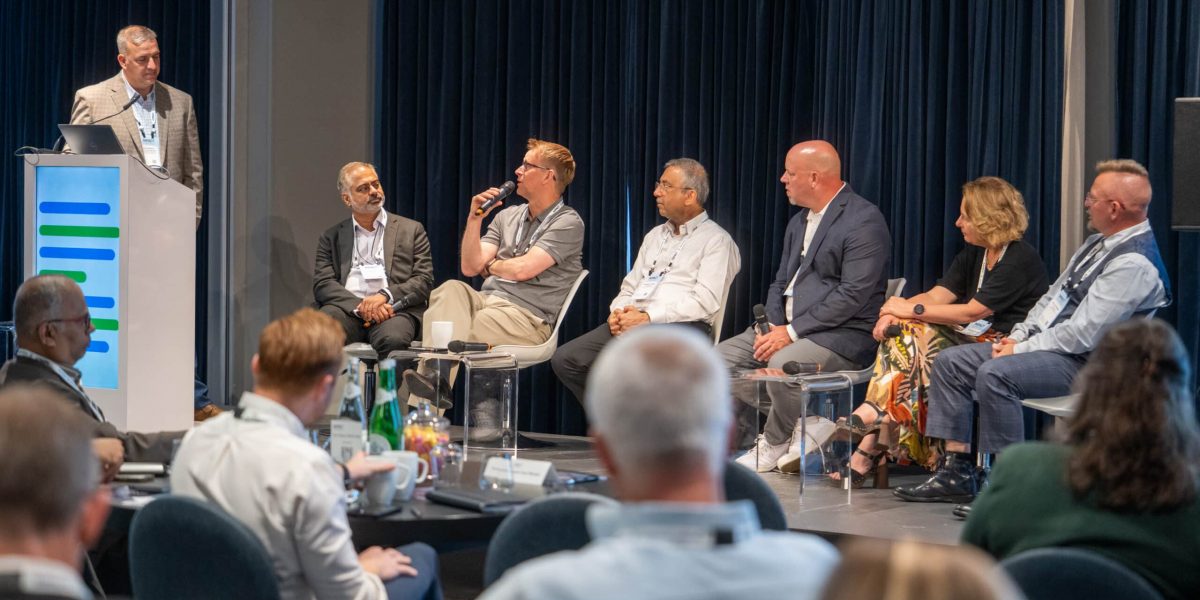
That was the focus of the Europe IMPACT panel discussion, AI, Digital Enablement & What Leading Programmes Are Prioritising Now. The session was moderated by Doug Martin, SVP, Subscriber Fulfilment & Implementation Executive at Benchmark Gensuite.
The panel featured JJ Van Der Bij, SVP Environmental, Safety, Health & Quality at Tate & Lyle; Remy Wierenga, Global Safety Director at Refresco; Nathalie Ruelle, Global Quality and Sustainability Director at H.B. Fuller; Chris Masters, Sr. Director, Global Environmental, Health & Safety at Tropicana; Mandar Phadke, VP Head of OHS & Well-Being at Ericsson; and R Mukund, Founder & CEO of Benchmark Gensuite.
Their discussion covered practical AI use cases, adoption considerations, data quality, frontline engagement, responsible AI use, and the future of digitally enabled EHS work. It also showed how AI can support efficiency today while helping teams prepare for more connected risk management in the future.
AI Adoption Is Moving from Exploration to Practical Use Cases
AI adoption looked different across the organisations represented on the panel. Some teams are still testing early use cases, while others are already applying AI-first thinking across business processes.
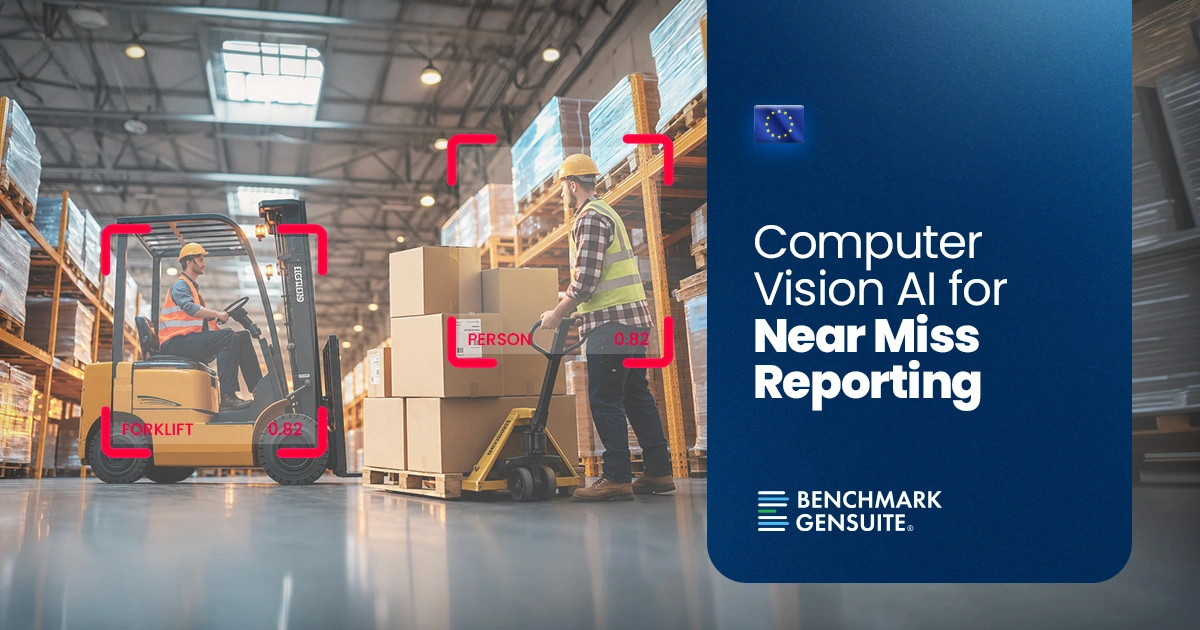
Remy from Refresco shared how his team is using AI-supported tools for transcription, incident investigation summaries, ergonomic assessments, and forklift-based vision systems. Mandar from Ericsson described an AI-first approach that includes everyday agents, visual intelligence for site surveys, drone-supported work planning, and AI-generated incident communication videos. Nathalie from H.B. Fuller explained that her team is focusing first on data, especially through SAP data and EQMS, because data foundations are needed before AI can scale more effectively.
That range reflects where many organisations are today. Some teams are proving value through focused use cases. Others are starting to connect AI with enterprise systems and operational workflows. More mature programmes are already asking how AI can support planning, execution, learning, and decision-making at scale.
For EHS teams, the entry point does not need to be overly complex. AI can start with practical, time-saving use cases, then expand as teams build confidence, responsible review processes, and better data connections.
Data Quality Still Determines What AI Can Deliver
One theme came up repeatedly during the panel: AI is only as useful as the data and context behind it.
Nathalie described H.B. Fuller’s focus on data as a necessary step before moving further with AI. For EHS and Quality teams, this matters because reliable data makes it easier to categorise risk, support reporting, identify patterns, and make AI outputs more useful.
This is where connected digital systems become important. When incident data, corrective actions, risk assessments, audit findings, permits, quality events, and other records sit in separate tools, AI has less context to work with. When information is structured and connected, AI can help teams see patterns faster and act with more confidence.
A connected EHS software foundation helps teams bring these workflows together, creating a better base for AI-enabled insights and more consistent programme execution. It also supports adjacent priorities, from Sustainability Management to Quality and operational reporting, because AI works best when it can draw from trusted information across the business.
From Saving Time to Rethinking How Work Gets Done
Several panellists spoke about speed as one of the first noticeable benefits of AI. Meeting notes, investigation summaries, permit reviews, and reporting tasks that once took hours or days can now be accelerated significantly.
The conversation also moved beyond speed. Mandar challenged teams to think past replacing existing processes with faster AI-supported versions. His point was that AI should not only make current work faster. It should help teams rethink how work is planned, executed, and improved.
That shift matters. If AI only helps EHS teams complete administrative tasks more quickly, the value is real but limited. The bigger opportunity is to free up time so teams can spend more of it in the field, understanding operations, supporting workers, facilitating better conversations, and preventing risk before it escalates.
Remy gave a practical example through learning teams. By using AI-supported recording and transcription, facilitators can focus on the conversation rather than trying to take notes at the same time. The output can help identify problem statements, summarise decisions, and support follow-up actions. That improves both speed and the quality of learning.
Connecting AI to Operational Risk
As the panel moved from current use cases to future priorities, the discussion focused more on predictive and connected risk management.
Mandar described the value of AI in planning work before execution, including using drone inputs and visual intelligence to design safer workflows. He also raised a future-state example where AI could help identify external risk factors, such as weather conditions, before people begin higher-risk work in the field.
This is where AI starts to support a more proactive operational risk model. Instead of only analysing what already happened, AI can help teams combine information from incidents, permits, inspections, site conditions, equipment data, work planning, and external signals to better understand where risk may be building.
The panel also discussed the need to bring together multiple data streams and apply stronger logic around how AI supports decision-making. That is especially relevant for organisations trying to move from reactive reporting to proactive risk control.
Responsible AI Needs Clear Guardrails and Human Judgement
As organisations explore AI, the panel also discussed the need to use it responsibly. AI can support faster analysis, better prompts, and more consistent outputs, but teams still need confidence in how information is reviewed, interpreted, and applied.
For EHS, Quality, and Operations teams, this is especially important when AI is supporting activities such as incident investigation, risk assessment, permit to work, management of change, HAZOP, ergonomics, and safety planning.
The panel repeatedly came back to the importance of human oversight. AI can summarise, recommend, classify, prompt, and accelerate, but professionals still need to challenge the output, understand the context, and make decisions based on site realities.
Tools like Genny AI can support faster insight, but the value still depends on reliable data, responsible use, and informed human judgment.
AI Is Supporting the Evolution of EHS Work
One of the most useful parts of the discussion focused on how AI can support EHS professionals as their programmes become more data-driven and digitally connected.
Rather than positioning AI as a substitute for expertise, the panel focused on how it can help teams spend less time on repetitive administrative work and more time on activities that require human judgement, operational understanding, and strong stakeholder engagement.
That may include coaching leaders, facilitating risk conversations, understanding how work is actually performed, improving frontline engagement, and helping operations make better decisions with stronger EHS guidance built into day-to-day workflows.
Nathalie also noted that AI can create new opportunities for teams, including data analyst and AI-focused roles that help organisations interpret information, build reports, and support adoption. Mandar spoke about reskilling, AI training, and making AI part of the organisational fabric.
For EHS teams, the opportunity is to use AI as a practical support tool, helping professionals apply their expertise more effectively across complex operations, growing data sets, and evolving programme needs.
Moving Forward with Purpose
AI adoption is not only about choosing new technology. It is about deciding where AI can help teams work smarter, learn faster, and reduce friction between EHS expectations and day-to-day operations.
For some organisations, the next step may be a focused proof of concept. For others, it may be building better data foundations, improving responsible review processes, or connecting AI outputs into existing EHS workflows. For more mature programmes, the priority may be moving from speed and automation towards prediction, prevention, and enterprise-wide learning.
EHS judgement remains essential. AI can help make that judgement easier to apply, especially when teams are managing complex operations, growing data volumes, and increasing expectations for better visibility.
The opportunity now is to use AI with purpose: to support people, strengthen decisions, reduce administrative burden, and help leading programmes move closer to proactive, connected risk management.