Insights from the Operational Safety: Frontline Operations Session at IMPACT 2026
During the Operational Safety: Frontline Operations session at the 2026 IMPACT Conference in Louisville, one message became increasingly clear as the discussion evolved: digital transformation in safety operations is no longer just a technology conversation — it is a people conversation.
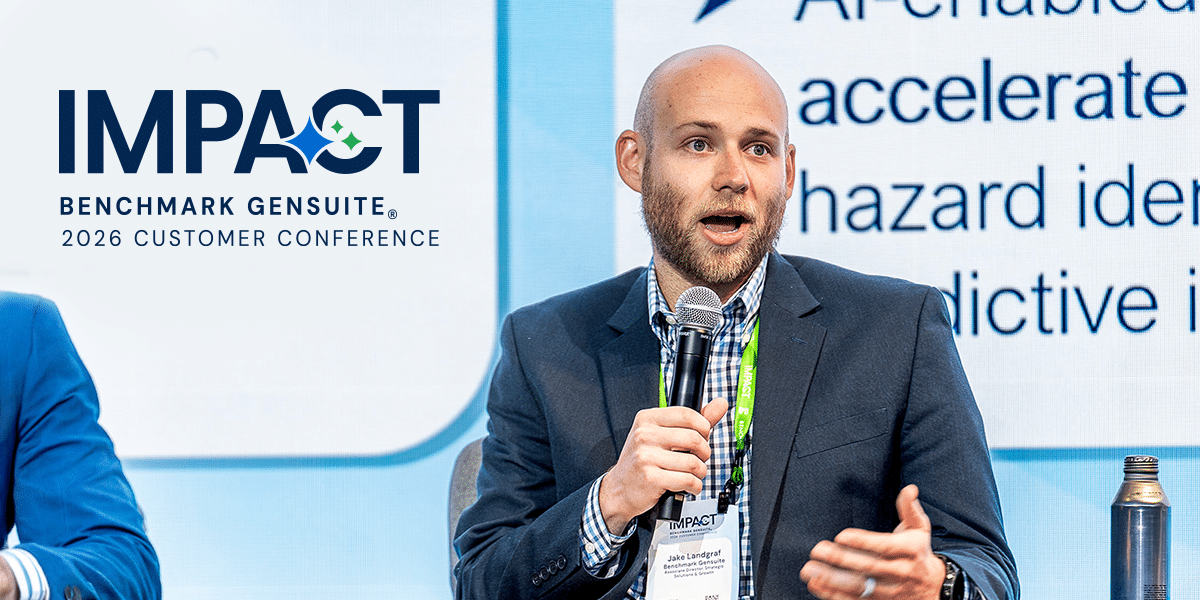
The session, led by Benchmark Gensuite leaders Jake Landgraf and Zach Taylor alongside Clint Longest, Director of EHS at FLANDERS, explored how organizations are working to bring greater visibility, consistency, and intelligence to frontline safety workflows, along with some of the common concerns frontline workers have when implementing digital tools.
Throughout the discussion, one idea surfaced repeatedly: successful digital transformation depends not only on implementing better tools, but also on helping frontline teams understand why those tools matter to their daily work.
Why Is Frontline Adoption Still One of the Biggest Barriers to Digital Transformation?
One of the strongest themes from the discussion was that implementing technology is often easier than gaining meaningful adoption across frontline teams.
Throughout the session, attendees openly shared concerns that many organizations continue to face when implementing digital solutions on the shop floor. Some questioned how organizations can expect frontline workers to adopt mobile workflows when employees may not have company-issued devices. Others pointed to the realities of multi-language operations, generational gaps in technology familiarity, and skepticism around digital monitoring.
For frontline employees working in fast-paced operational environments, new technologies can sometimes feel disconnected from the realities of the work happening on the floor. In many cases, workers are not resisting technology itself, they are questioning whether new systems will genuinely improve their daily responsibilities or simply introduce another layer of oversight.
When leadership teams evaluate new platforms, the conversation often centers around ROI, operational visibility, reporting capabilities, and process efficiency. Frontline workers, however, are asking a different question entirely: how will this technology help me do my job more safely, efficiently, and consistently?
For employees already managing physically demanding and operationally complex workdays, digital tools cannot feel like “one more thing” added to the process. Workers need to understand how these technologies help reduce friction, improve communication, surface issues faster, and ultimately make their work safer and easier to perform.
Why Is Real-Time Visibility So Important for EHS Leaders?
Amid frontline reticence to adopt digital technologies, today’s EHS leaders are being asked to do far more than maintain compliance. Organizations expect safety leaders to proactively identify risks, respond quickly to operational issues, and provide leadership teams with actionable data that supports faster, more informed decision-making.
But none of that is possible without visibility into the work happening across operations.
Jake Landgraf emphasized that many organizations already have procedures, governance structures, and enterprise systems in place, yet still struggle to understand what is truly happening in the field and at the point of work.
That disconnect represents what many organizations are beginning to recognize as the “last mile” problem in digital transformation. Companies may have documented procedures and established safety programs, but still lack a reliable way to verify whether those processes are being followed consistently during day-to-day operations.
A critical challenge surfaced throughout the conversation: organizations may believe safety procedures are being followed, but often lack the visibility needed to consistently verify it in real time.
Landgraf expanded on this challenge while discussing frontline execution and operational consistency:
“The routine process of doing this on a daily basis is the way that you actually close the gap between what we know we need to be true and right versus what is actually happening on an hourly basis.”
Ultimately, the conversation reinforced a crucial point: digital transformation is not simply about replacing paper with mobile tools. It is about creating a clearer operational picture; one that enables organizations to move from reactive safety management toward more proactive, connected decision-making.
Read more on how hidden EHS silos can erode how your organization operates.
Why Frontline Engagement Matters More Than Technology Itself
One of the most revealing moments of the discussion came when Clint Longest reflected on the human side of operational change:
“One thing I’ve learned is people don’t like change, but they don’t like the way things are now either.”
That tension sits at the center of many digital transformation initiatives today. Organizations want better operational visibility, stronger communication, faster reporting, and more connected decision-making. But frontline workers are also evaluating whether new technologies will make their work more complicated, increase oversight, or disrupt routines that have existed for years.
According to Longest, overcoming that resistance requires organizations to shift the conversation away from the technology itself and focus instead on personal value.
As he explained during the session:
“You have to show them the value of why this is important to them — not the company, to them, to their department, to the people they stand shoulder to shoulder with, how it adds value to them on a daily basis.”
Frontline adoption improves when workers understand how digital tools can simplify communication, reduce repetitive processes, surface operational issues faster, improve consistency, and help create safer day-to-day working environments. Without that connection, even the most advanced digital systems can struggle to gain long-term adoption.
How Can Organizations Build Trust During Digital Transformation?
To overcome these challenges, during this session the speakers highlighted an important reality: successful digital transformation depends heavily on trust, communication, and leadership visibility.
FLANDERS shared several practical examples of how the company approached adoption across operations, including:
- Pairing less tech-savvy employees with experienced users during implementation
- Configuring workflows around operational realities and frontline needs
- Maintaining continuous engagement with frontline teams throughout rollout
- Encouraging operational leaders and executives to spend more time directly on the floor through Layered Process Audits
- Creating stronger communication between leadership and frontline workers during the transformation process
Rather than treating adoption as a compliance exercise, the focus remained on helping employees feel involved in the process of change itself. That approach reinforced a key takeaway: workers are more likely to embrace operational change when they feel heard, supported, and involved in the process.
Where Digital Transformation Creates Real Operational Value
The Operational Safety session at IMPACT 2026 reinforced an important idea: digital transformation is most effective when frontline engagement is part of the process from the beginning.
Investing in connected platforms, AI-enabled workflows, and mobile tools can help organizations improve visibility, strengthen communication, and support safer operations. But long-term impact depends on helping frontline teams understand the value these tools bring to their daily work.
Solutions like ANVL, integrated within the Benchmark Gensuite platform, are helping organizations create stronger connections between operational visibility, frontline workflows, and real-time decision-making.
More broadly, the conversation highlighted that successful digital transformation in EHS is not only about digitizing processes, but also about creating safer, more connected operations by strengthening the relationship between leadership, frontline teams, and the realities of day-to-day work.
See how connected frontline workflows can improve operational visibility and workforce engagement.