Semiconductor organizations operate highly mature safety programs while managing complex, high-consequence hazards embedded in routine and non-routine operations. Despite strong performance against traditional metrics, serious exposure can persist within maintenance activities, tool installations, chemical and gas management, and contractor interfaces—often without injury or immediate consequence.
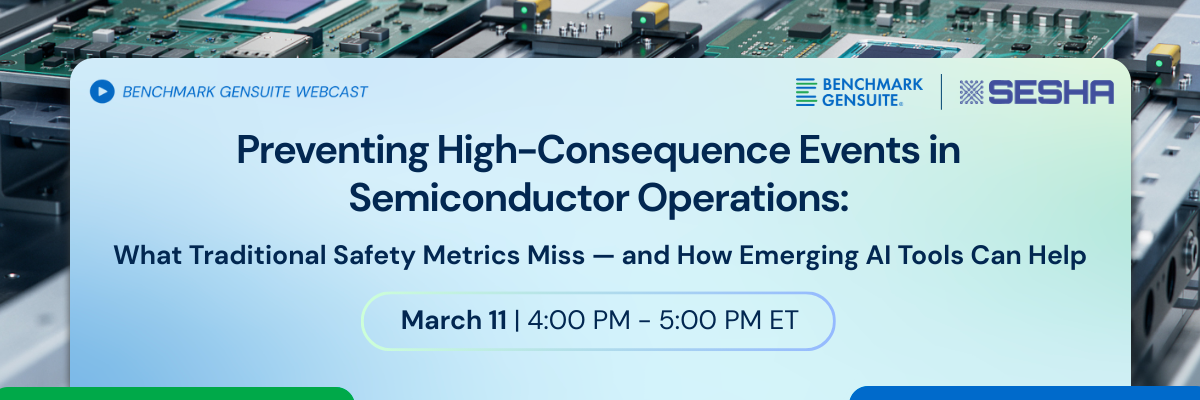
This peer-to-peer session focuses on where high-consequence operational risk continues to surface in fabs and why abnormal events and near misses frequently represent underused learning signals. Through concise fab-relevant scenarios, the discussion will examine how operational drift, assumptions about controls, and transitional work states can erode risk visibility over time.
The session will also include a brief overview of how emerging AI-enabled approaches can support existing risk management practices. AI-assisted PHA bowtie assessments and AI-driven risk advisory tools will be discussed as decision-support capabilities that help structure hazard identification, improve consistency, and surface potential control gaps earlier—without replacing engineering judgment or established safety processes.
Designed as a collaborative learning conversation, this session invites SESHA members to reflect on practical ways to strengthen operational safety and reduce exposure to high-consequence events in advanced manufacturing environments.