Scaling Safety with AI: How Modern EHS Management Software Supports Growing Operations
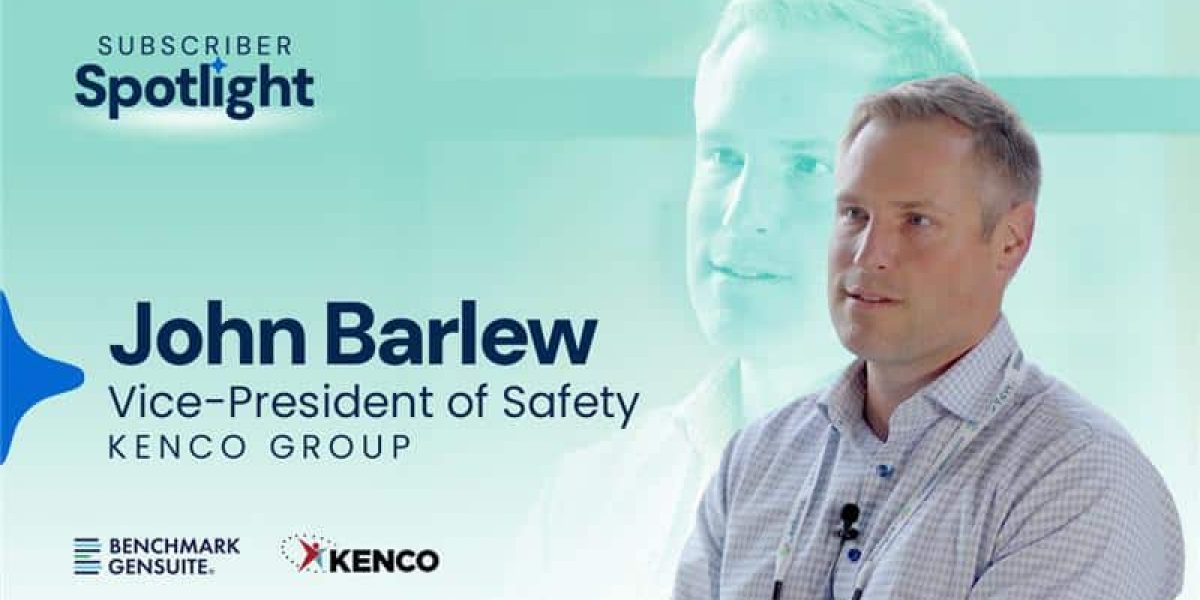
For John Barlew, Vice President of Safety with Kenco, safety has never been a static program; it’s a moving target shaped by growth, people, and the realities of day-to-day operations. Leading safety for a large, fast-paced logistics organization means navigating constant change: new facilities coming online, new employees joining the workforce, and evolving customer and regulatory expectations. Each shift brings new challenges and operational risks that can’t be managed with yesterday’s tools or approaches.
As the company expanded, John saw firsthand how traditional processes began to strain under the weight of that growth. What his team needed wasn’t just another piece of software, but a partner that could keep pace with their operations, support frontline teams, and turn safety data into clear, practical action. His experience reflects a broader truth across the logistics industry: when the environment moves fast, safety strategies must evolve just as quickly.
Key Takeaways from John Barlew for Modern Safety Programs
- Growth reshapes risk—fast-moving operations require safety strategies that evolve alongside new facilities, new employees, and changing customer expectations.
- AI turns observations into action—tools that analyze tasks and generate clear recommendations help teams move quickly from insight to real operational improvements, generating ROI for operations, employees, and customers.
- Partnership matters as much as technology—the right safety provider supports implementation, aligns with company values, and helps scale programs with confidence.
- Engagement is the foundation of performance—real-time visibility into training, reporting, and participation helps build a culture where every employee contributes to safer outcomes.
What factors matter most when selecting a safety management software for a growing organization?
John: I had worked with Benchmark previously at another employer, and we began the diligence phase of choosing a safety management partner for Kenco in late 2023. We evaluated five or six different software providers and ultimately selected Benchmark.
I look closely at the character of the team representing the solution, in addition to the product itself. From start to finish, and continuing today, Benchmark’s team has aligned well with the principles and character of our organization. Every step of the process, we’ve been supported and treated as true partners, and that played a major role in our decision.
The technology roadmap, artificial intelligence capabilities, and data functionality are all top-notch. Kenco is growing quickly, acquiring businesses, and operating on a fast-paced roadmap. Benchmark is the right partner to help us continue our safety journey and advance toward safety excellence.
Learn how the right safety management partner can support growing operations.
How significant are musculoskeletal injuries in warehousing and what challenges do they create for organizations like Kenco?
John: In warehousing and logistics, the number one cause of injury is soft-tissue musculoskeletal injuries. We’re not immune to that. Beyond serious injury and fatality prevention, minimizing ergonomic risk factors is a major focus area.
The issue is so widespread that in 2022, OSHA announced a National Emphasis Program on warehousing due to high recordable injury rates, primarily related to ergonomics.
Having a solution that we can put into the hands of corporate safety staff and site leaders allows us to address these risks directly. It provides a quantitative tool and clear recommendations for reducing risk factors. That will enable significant injury reduction and knowledge creation across the organization.
I’m excited to see how we use this tool over the next year and how it drives action tracking and continuous improvement across our safety management system.
Can you share an example of how technology—specifically AI—has helped your team address these challenges?
John: Our sales representative provided a trial of Ergo Evaluator with 3motionAI. Around that time, we acquired a nationwide logistics network for a medical provider in our Life Sciences Division. One of the tasks required overhead lifting because of how the product was stacked in the trailers.
By deploying the tool with one of our corporate specialists on site, we were able to quickly analyze the task, run the AI, and generate a report. We shared that report with internal and external stakeholders, and it immediately led to commitment from both the customer and Kenco leadership to improve the task. It also triggered financial investment from both parties to engineer the ergonomic risk factors identified in the report.
A one-minute video led to a long-term investment. It demonstrated Kenco’s ability to provide an ergonomic solution that benefited our bottom line while improving the customer’s safety performance. The solution is driving knowledge sharing and training opportunities at the floor level, while also promoting financial value and ROI for both Kenco and our customer providers.
See how AI-powered ergonomic analysis helps turn observations into measurable improvements.
How are you planning to scale these ergonomic and AI-driven insights across the organization?
John: We’re planning to launch Ergo Evaluator across the corporate team this year. With a thousand AI generations included in the agreement, I can’t even imagine what we’re going to achieve as a result of deploying that module.
What role does the implementation process play in building trust between safety teams and software providers?
John: From the beginning, the sales team was engaged, responsive, and transparent about timelines and the implementation schedule. They also provided guidance on structuring our hierarchy for legal reporting and maximizing the software’s capabilities.
We’re unique in that we don’t have safety managers at every location. Instead, we rely on operations leaders who wear multiple hats. Having a solution they can easily access—where they can submit information, receive reminders, and work from a clean dashboard—makes their lives easier. It also improves efficiency, reliability, and overall system adoption.
From the initial RFP process through implementation, our sales implementation manager, Anthony, has been outstanding—realistic, responsive, and organized. We met our implementation timeline, and the deployment of all modules has gone according to schedule. For our IT team to speak positively about a SaaS provider says a lot.
Discover why a strong implementation approach supports long-term safety success.
In what ways do workforce changes reshape the way you approach safety engagement across Kenco’s operations?
John: The warehousing industry is very fast-paced, and after the pandemic there was a significant surge in demand. Many companies that previously operated their own fulfillment centers moved to third-party providers like Kenco.
The workforce has also changed. We now have many inexperienced, first-time warehouse employees entering the workplace, which creates unique safety risks. Having a tool like Benchmark allows employees to report concerns if they don’t fully understand a process. With Training Tracker, we can see who is meeting compliance requirements and safety standards. We also engage employees through committees, events, and learning teams that we track in the system.
Engagement is a major part of our safety culture and strategy. We’ve set a goal of 100% associate engagement, and with Benchmark’s insights reporting, I can see at any moment how we’re performing against our targets. That ability to provide real-time data to leadership is extremely valuable.
Final Reflections: Rethinking Safety for Evolving Work Environments
John Barlew’s experience highlights how fast-growing operations need safety strategies that evolve just as quickly. By combining AI-driven insights with a trusted implementation partner, organizations can move from reactive processes to proactive, data-informed action. For Kenco, the right technology isn’t just about efficiency—it’s about enabling frontline teams, strengthening engagement, and driving measurable improvements across every facility as the business continues to grow.